
- /
What Crystal Coast Buyers Should Know About New Construction Trends
Buyers in Crystal Coast face unique permitting, flood-zone, and site-feasibility hurdles when pursuing new construction. Understanding Carteret County's multi-step approval process, coastal flood requirements, and jurisdiction rules is essential before breaking ground or making an offer on a new build.
What do buyers and builders in Crystal Coast need to know about new construction trends?
New construction on the Crystal Coast involves more than choosing a floor plan. Buyers in Crystal Coast and the builders who serve them must navigate Carteret County's layered permitting process, coastal flood-zone rules that took effect in early 2025, and jurisdiction-by-jurisdiction approval requirements before pouring a single foundation. Getting these details right from the start protects your timeline, your budget, and your investment.
Key Takeaways
- A complete Carteret County building-permit application takes approximately 3–5 business days for review by the building inspector, zoning official, and floodplain manager, but missing information resets that clock.
- Beginning January 17, 2025, new construction in portions of unincorporated Carteret County's Coastal A flood zone must meet V-zone standards, including elevation on piers, pilings, or columns and breakaway walls below base flood elevation.
- Projects inside Emerald Isle, Atlantic Beach, Cape Carteret, and other coastal municipalities require town-level planning, zoning, and floodplain approval before Carteret County can issue the building permit.
- Confirm septic feasibility before you commit to a lot; the county's site-preparation permitting process requires detailed wastewater-system, water-supply, wetlands, and easement information before installation can begin.
- Buyers evaluating new construction should request approved plans, elevation documentation, flood-zone determination, septic authorization, permit status, and contractor license numbers before closing.
I work with buyers in Crystal Coast every week who come to me with a floor plan in hand and no idea what the land beneath it requires. That's the wrong order. Here's what you actually need to know before you build, or before you buy a newly built home on the coast.
Why does the parcel come before the floor plan for Crystal Coast new construction?
The single biggest mistake I see buyers in Crystal Coast make is falling in love with a design before they've verified what the land will allow. On the Crystal Coast, the parcel drives everything: foundation type, usable square footage, engineering requirements, and ultimately total cost.
Flood-zone designation shapes the entire design
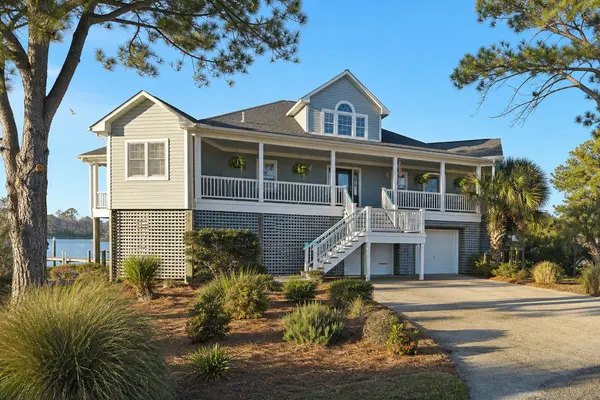
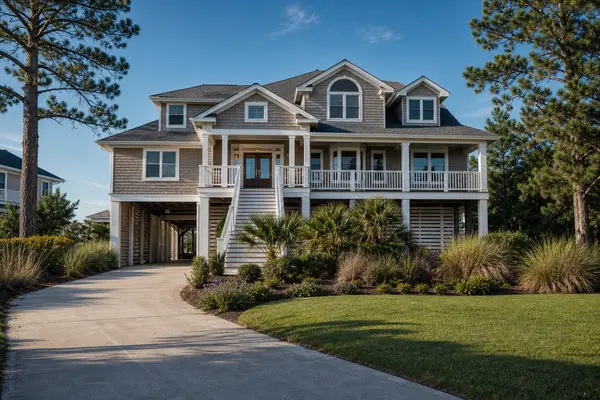
Flood-zone status is not a detail you confirm at closing. It determines whether you can build your home the way you envision. Beginning January 17, 2025, portions of unincorporated Carteret County entered the new Coastal A flood zone, and new construction in those areas must meet V-zone construction standards, including elevation on piers, pilings, or columns; breakaway walls; and flood venting for any enclosed space below the base flood elevation. These aren't late-stage add-ons. They affect the home's layout, lower-level usability, and engineering from the very first drawing.
Before you acquire a lot or commission plans, verify the property's flood-zone designation using the Carteret County GIS website or the North Carolina Flood Risk Information System. Carteret County also administers the Flood Damage Prevention and Protection Ordinance for unincorporated areas and for Bogue, Peletier, and Indian Beach through its Planning and Development department. That's your first call.
Septic feasibility can make or break a lot
Not every lot in Carteret County can support a septic system, and a lot that can't support one isn't buildable, period. The county's site-preparation permitting process requires detailed information about the proposed facility, number of bedrooms, occupants, wastewater-system design, water supply, easements, rights-of-way, wetlands, buffers, and other legal restrictions. That permitting must be completed before installation begins. I always tell buyers in Crystal Coast: get the site-prep evaluation done before you decide to buy a lot, not after.
According to the National Association of Realtors, site and lot conditions are among the most common sources of new-construction delays nationwide. On the Crystal Coast, coastal environmental restrictions make that even more pronounced.
How does the Carteret County permitting process work for new builds?
The permitting sequence for new residential construction in Carteret County involves multiple approvals, and the order matters. Skipping a step or submitting an incomplete application doesn't just slow you down; it can stop the project entirely.
What a complete application requires
According to the Carteret County permit-application process, applicants generally need:
- An Environmental Health Department authorization to construct
- Applicable CAMA (Coastal Area Management Act) permits
- A completed building-permit application
- A property plot plan
- Two sets of building plans
- Contractors' and subcontractors' names and license numbers
A complete application may take approximately 3–5 business days for review by the building inspector, zoning official, and floodplain manager. That timeline only applies when the application is genuinely complete. Missing contractor information, an outstanding environmental authorization, or an unresolved jurisdictional question can prevent the county from accepting the application.
The county provides a building-permit application packet with permit offices in Morehead City and Cedar Point. Review that packet before you file; requirements and contact information can change, and the county also publishes a fee schedule that builders should confirm before budgeting.
Jurisdiction determines your first step
This is where many builders run into delays they didn't see coming. If your project is inside Atlantic Beach, Bogue, Cape Carteret, Cedar Point, Emerald Isle, Indian Beach, or Peletier, you must first obtain planning, zoning, and floodplain approval from that town before Carteret County can issue the building permit. The county handles unincorporated areas directly, but the municipalities have their own review steps. Identify your permitting authority before you build your timeline; a county-only schedule may not account for the town's review layer.
For buyers in Crystal Coast purchasing a new build inside one of these municipalities, this also means asking the builder which approvals are already in hand. A county-issued permit alone may not tell the full story.
|
Approval Type |
Who Handles It |
When It's Required |
|---|---|---|
|
Planning, zoning, and floodplain review |
Town (Emerald Isle, Atlantic Beach, etc.) |
Before county permit, for projects inside a municipality |
|
Building permit |
Carteret County |
After town approval (if applicable) and complete application |
|
CAMA permit |
NC Division of Coastal Management |
For development in Areas of Environmental Concern |
|
Environmental Health authorization |
Carteret County Environmental Health |
Before building permit issuance |
|
Site-preparation / septic permit |
Carteret County Environmental Health |
Before wastewater system installation |
Every situation is different, and the only way to know exactly which approvals apply to your specific parcel is to work through the process with someone who knows this market. That's where a local agent and your project team earn their keep.
What should buyers prioritize when evaluating a new build on the Crystal Coast?
Buying a newly built home is not the same as buying a resale. You're not just evaluating what you can see; you're evaluating the decisions that were made before the drywall went up. Here's what I walk my clients through on every new-construction purchase.
Ask for the paper trail
A well-built coastal home comes with documentation. Ask the builder or seller for:
- Approved building plans and permit status
- Elevation certificate and flood-zone determination
- Septic or water-supply authorization
- Inspection records at each stage of construction
- Names and license numbers of contractors and subcontractors involved
These records matter. The county's permitting process requires contractor licensing information before issuing a permit, so a permitted project should have that documentation. If a builder can't produce it, that's a signal worth taking seriously.
The Consumer Financial Protection Bureau also notes that new-construction buyers should pay close attention to builder contracts, warranties, and financing terms, which often differ significantly from resale transactions. Your real estate attorney will review the contract at closing, but I recommend involving them earlier in the process on new builds.
Resilience is a feature, not a luxury
On the Crystal Coast, a home built to current flood standards, elevated correctly, with proper foundation engineering and flood venting, is more insurable, more durable, and more valuable over time than one that just squeaks by. The National Flood Insurance Program rates are directly tied to elevation relative to base flood elevation, so the construction decisions made during the build directly affect your annual carrying costs.
Buyers in Crystal Coast comparing a new build to an existing home should weigh this carefully. A newer home built to post-2025 Coastal A standards may carry meaningfully different insurance costs than an older home at a similar price point. That's a conversation worth having with your insurance agent before you make an offer.
If you're weighing new construction in New Bern or other inland Crystal Coast communities, the flood-zone picture looks different. I cover some of those specifics in my post on new construction homes in New Bern, NC. For a broader look at everyday life across the region, living in Carteret County on the Crystal Coast gives you a grounded picture of the area before you commit to a location.
Your specific situation- the lot, the design, the timeline, and the budget- depends on details that no blog post can fully capture. The only way to get a clear picture is to work through it with someone who knows this market and has walked buyers in Crystal Coast through this process before. That's exactly what I do.
I'd love to hear what you've read from other clients. Check out my reviews on Google, Zillow, and Realtor.com.
Frequently Asked Questions
What should I verify before buying a vacant lot for new construction in Crystal Coast?
Verify the lot's flood-zone designation, base-flood elevation, wetlands or environmental restrictions, CAMA jurisdiction, septic feasibility, water supply, easements, setbacks, and which municipality (if any) governs planning and zoning approvals. The Carteret County site-preparation application outlines the site and utility details required before wastewater permitting can begin; reviewing that list before you make an offer is a smart way to spot potential problems early.
Does my Carteret County lot require a septic permit before I can build?
Yes, if the property relies on a private wastewater system, the county's site-preparation permitting must be completed before installation begins. The process requires detailed information about the proposed structure, number of bedrooms, wastewater-system design, water supply, easements, and environmental restrictions. A lot that can't support an approved wastewater system is not buildable, so this evaluation should happen before you commit to the purchase.
How do Coastal A and V-zone requirements affect a new home in Crystal Coast?
Beginning January 17, 2025, new construction in portions of unincorporated Carteret County's Coastal A flood zone must meet V-zone construction standards, including elevation on piers, pilings, or columns, breakaway walls, and flood venting for enclosed space below base flood elevation. These requirements affect the home's foundation design, lower-level usability, and construction budget from the earliest planning stage. Verify your parcel's flood-zone status using the Carteret County flood-information resources before commissioning plans.
Which town approves my project if I am building in Emerald Isle, Atlantic Beach, or another coastal municipality?
For projects inside Atlantic Beach, Bogue, Cape Carteret, Cedar Point, Emerald Isle, Indian Beach, or Peletier, you must obtain planning, zoning, and floodplain approval from that town before Carteret County can issue the building permit. Each municipality has its own review process, so your permitting timeline should account for both layers. Contact the relevant town's planning or zoning office first to understand their specific requirements.
How long does a Carteret County building-permit review take?
A complete application may take approximately 3–5 business days for review by the building inspector, zoning official, and floodplain manager, according to the Carteret County permit-application process. That timeline applies only when the application is complete; missing contractor information, an outstanding environmental authorization, or unresolved jurisdictional approvals can prevent the application from being accepted and reset the clock.
What should buyers prioritize when comparing a newly built coastal home with an existing home?
Buyers in Crystal Coast should ask for the full permit and inspection record, elevation certificate, flood-zone determination, and contractor license documentation on any new build. Beyond paperwork, consider how the home's construction standard affects flood-insurance costs. A home built to current Coastal A or V-zone elevation requirements may carry different insurance rates than an older home at a similar price point, affecting your long-term carrying costs in ways a purchase-price comparison alone won't show.
Ready to build or buy new construction on the Crystal Coast?
New construction on the Crystal Coast rewards buyers and builders who do the groundwork first. The permitting layers, flood-zone requirements, and site-feasibility questions are manageable, but only if you know what to ask before you're committed.
I walk my clients through every step of this process, from lot evaluation to closing day. Reach out directly at vicki@thelemmondgroup.com to talk through your new-construction questions, or search available properties on the Crystal Coast to see what's on the market right now.
This article is provided for general informational purposes only and does not constitute legal, tax, or financial advice. Readers should confirm all permitting requirements, flood-zone designations, and transaction details with a licensed real estate attorney, tax advisor, or lender. Vicki Lemmond | NC License | REAL Broker LLC & NC Real Estate Commission. Equal Housing Opportunity.
Categories
- All Blogs (13)
- 1031 exchange (2)
- AE flood zone (1)
- airbnb vrbo nc (1)
- Beaufort NC (1)
- Bogue Banks (1)
- building homes Crystal Coast (1)
- buyers Crystal Coast (1)
- CAMA permits (1)
- Carteret County (7)
- Carteret County housing market (1)
- carteret county occupancy tax (1)
- Carteret County permits (1)
- cash flow (1)
- Coastal A Flood zone (1)
- coastal flood zone (1)
- coastal real estate (2)
- Craven County Real Estate (1)
- Crystal Coast (10)
- Crystal Coast housing pressure (1)
- Crystal Coast sellers (3)
- days on market (1)
- deficiency judgement (1)
- divorce home sales (1)
- Eastern NC (1)
- Emerald Isle (1)
- Emerald Isle NC (1)
- Emerald Isle new builds (1)
- Emerald Isle Real Estate (1)
- equitable distribution (1)
- estate sale (1)
- estate sale New Bern (1)
- estate sale Swansboro (1)
- executor home sale (1)
- flood zone (1)
- Goldsboro market 2026 (1)
- Goldsboro NC (1)
- home pricing (1)
- home valuation (1)
- inherited property (1)
- investment properties (1)
- investment property (4)
- Lemmond Real Estate Group (3)
- list to sale price ratio (1)
- low equity seller (1)
- morehead city (1)
- NC estate law (1)
- NC real estate (1)
- New Bern Market 2026 (1)
- New Bern real estate (1)
- new construction Crystal Coast (1)
- North Carolina (2)
- North Carolina estate law (1)
- North Carolina real estate (2)
- Onslow County (2)
- probate property (1)
- probate property sale (1)
- property management (1)
- real estate investing (3)
- rental income (1)
- rental property (2)
- rental yields (1)
- second home (1)
- seller strategy (1)
- selling during divorce (1)
- selling estate property NC (1)
- selling inherited home (1)
- short sale (1)
- short-term rental (3)
- swansboro (1)
- swansboro nc (1)
- Swansboro real estate (1)
- tax deferral (1)
- The Lemmond Group (1)
- UDO (1)
- Unified Development Ordinance (1)
- vacation home (1)
- vacation rental (1)
- vacation rental investment (1)
- Vicki Lemmond (3)
- waterfront homes (1)
- waterfront investment (2)
- Wayne County NC (1)
Recent Posts